

Creatine HCl vs Monohydrate Which Should You Take
When you stack up creatine HCl vs monohydrate, the winner for most people is pretty clear-cut. Creatine monohydrate takes the crown, backed by decades of research, proven results, and a much friendlier price tag.
So, where does that leave creatine HCl? It’s a solid backup plan, but really only for the small group of people who get consistent bloating or stomach upset from the classic monohydrate form.
A Quick Look At Creatine HCl vs Monohydrate
Before we get into the nitty-gritty, let's set the stage. The whole debate between these two creatine forms often boils down to slick marketing versus a mountain of scientific evidence. Both are designed to do the same thing—saturate your muscles with creatine to boost strength, power, and growth—but how they get there, and the proof behind them, couldn't be more different.
Creatine monohydrate isn't just a popular choice; it's the undisputed gold standard. This is the form you'll find in nearly every major study that has cemented creatine's reputation as a top-tier supplement.
Creatine HCl is the new kid on the block. It was engineered to dissolve better in water, sparking the theory that better solubility might mean better absorption and fewer side effects. The question is, does that theory hold up in the real world?
To get a quick sense of how they compare, here's a simple breakdown.
At a Glance Creatine Monohydrate vs Creatine HCl
This table cuts right to the chase, laying out the key differences between the two most popular forms of creatine. It’s a great starting point for understanding what truly sets them apart.
| Attribute | Creatine Monohydrate | Creatine HCl |
|---|---|---|
| Scientific Backing | Extensive: Backed by hundreds of peer-reviewed studies over 30+ years. | Limited: Very few human performance studies exist specifically for this form. |
| Proven Efficacy | High: Unquestionably proven to increase strength, power, and muscle mass. | Theoretical: Assumed to be effective, but lacks direct, robust evidence of superiority. |
| Bioavailability | Excellent, with over 99% absorption into the bloodstream. | Marketed as higher, but it's hard to improve on monohydrate's near-perfect absorption rate. |
| Solubility | Good, especially micronized versions. | Excellent: Dissolves much more easily in water, leaving no gritty residue. |
| Common Side Effects | Potential for minor bloating or stomach upset, often fixed by adjusting the dose and drinking enough water. | Marketed as causing fewer digestive issues, though research on this is minimal. |
| Standard Dose | 3-5 grams daily. | 1-2 grams daily (marketed as a "micro-dose"). |
| Cost Per Serving | Very low: One of the most affordable sports supplements you can buy. | High: Significantly more expensive per gram than monohydrate. |
As you can see, while HCl wins on solubility, monohydrate dominates in the areas that matter most: proven results, scientific validation, and value.
The Gold Standard and the New Challenger
To really get into the creatine HCl vs monohydrate debate, you have to understand what they are. One is the old-school, undisputed champion backed by mountains of research. The other is a newer contender designed to solve a specific problem. It's less about which one is "better" and more about which tool is right for the job.
Creatine monohydrate is called the "gold standard" for a good reason. It’s a simple, elegant molecule: just creatine bonded to a single water molecule. This is the form that’s been put through the wringer in hundreds of scientific studies over decades, proving time and again that it’s both safe and incredibly effective. To learn more about the original, check out our guide on what creatine monohydrate is. Its reputation is the yardstick all other creatines are measured against.
The Engineered Alternative: Creatine HCl
Then you have creatine HCl, or hydrochloride. This one is the new kid on the block, chemically engineered by attaching a hydrochloride group to the creatine molecule. This little tweak makes a huge difference in how it behaves in water—it dissolves almost instantly.
The big idea behind creatine HCl is that better solubility means better absorption. The theory is you can take a smaller dose and sidestep the bloating or stomach upset some people get from monohydrate.
That’s a powerful selling point, for sure. But it’s crucial to remember that dissolving well in a glass doesn’t automatically mean it works better inside your body.
What the Market Tells Us
You can see monohydrate's dominance just by looking at the numbers. In the Asia Pacific region alone, a market worth over USD 113 million, creatine monohydrate makes up a massive 60% of sales. People stick with it because it’s proven to work.
At the same time, the market segment that includes creatine HCl is the fastest-growing. This tells us that people are definitely looking for alternatives that promise the same muscle-building benefits with fewer potential side effects. Even as the science overwhelmingly backs the original formula, this trend sets the stage for a real-world comparison of how these two stack up.
Efficacy and Absorption: A Scientific Showdown
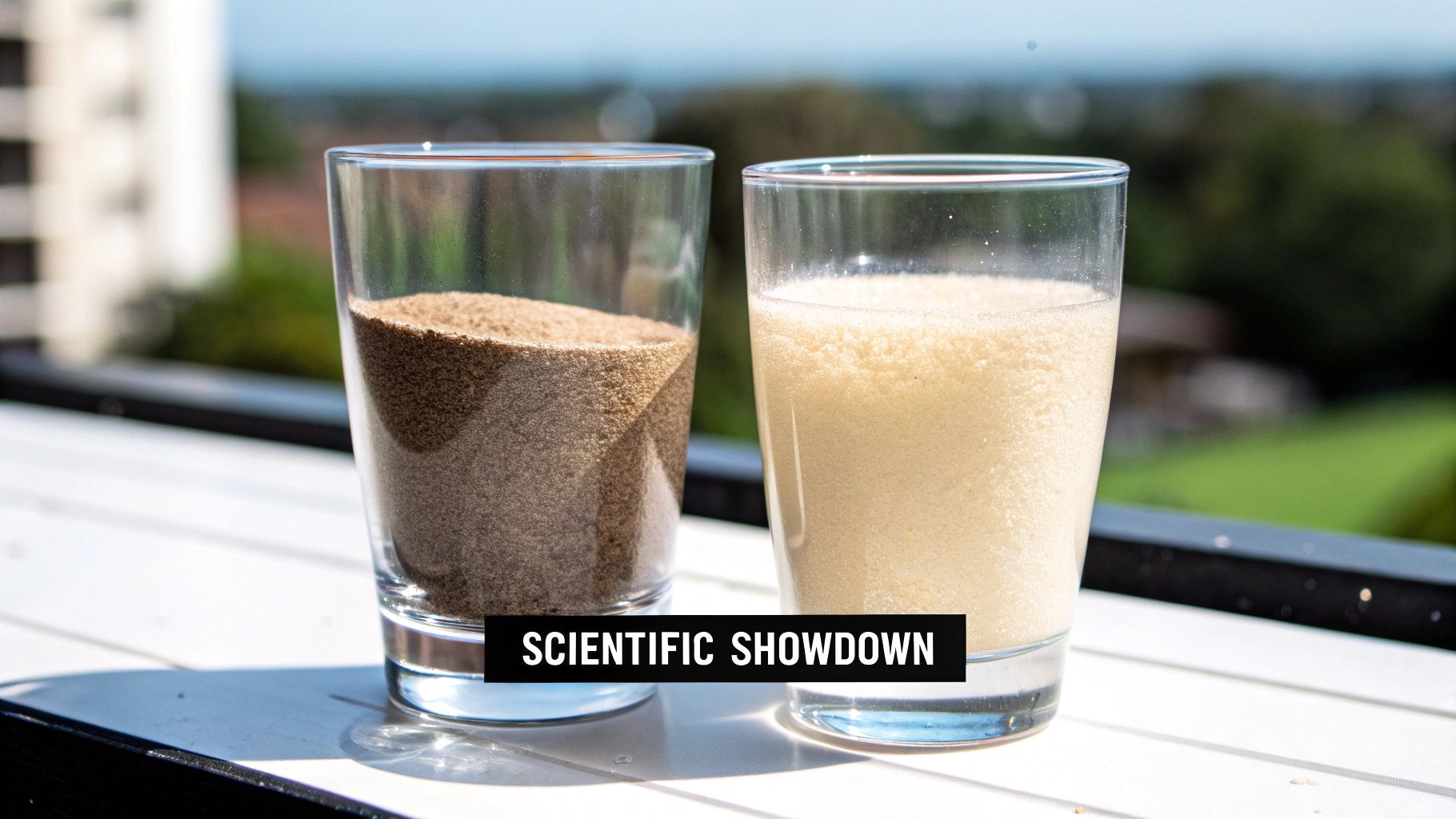
When we get down to what really matters—performance in the gym and on the field—the conversation has to be driven by science, not just marketing hype. The whole point of taking creatine is to load your muscles with phosphocreatine to power through intense workouts. So, the big question is: which form actually gets the job done?
Creatine monohydrate is the undisputed champion here, backed by a mountain of evidence. We're talking about hundreds of studies spanning three decades, all confirming its power to increase muscle creatine, boost strength, and elevate athletic performance. It's the gold standard for a reason; nearly every study that has solidified creatine's legendary status used the monohydrate form.
On the other hand, the research library for creatine HCl is noticeably sparse. While it’s chemically still creatine and should theoretically work, there's a serious lack of robust human trials showing it’s any better—or even equal—to monohydrate for building strength and muscle.
Unpacking the Solubility Myth
The number one claim you’ll hear about creatine HCl is its superior solubility. It dissolves beautifully in water, which manufacturers say leads to better absorption and allows for smaller doses. The first part is true—it’s definitely more soluble. The second part is where the argument starts to fall apart.
Just because something dissolves well in a glass doesn't mean it's absorbed better by your body. The only thing that truly matters is how much creatine actually gets from your gut into your bloodstream.
Here's the kicker that often gets lost in the noise: creatine monohydrate already has an incredible bioavailability of over 99%. Your body absorbs it almost perfectly, leaving virtually no room for another form to improve upon it.
So, while creatine HCl’s ability to dissolve quickly is a neat trick, it doesn't offer any real, practical advantage once it's inside your body. You simply can't get much better than 99% absorption.
Does Better Absorption Mean Better Muscle Uptake?
Let's even play devil's advocate and assume HCl gets absorbed a tiny bit faster. The final, most important step is getting that creatine into the muscle cells. This is handled by specific transporters in your body and is the real bottleneck in the process—not how fast it leaves your gut.
There is currently zero scientific proof that the hydrochloride salt helps creatine get into your muscle cells more effectively than monohydrate does.
Your body is already incredibly good at absorbing and using creatine monohydrate. This built-in efficiency is precisely why the standard 3-5 gram daily dose is proven to fully saturate your muscles over a few weeks.
- Creatine Monohydrate: Its success comes from its near-perfect bioavailability and the body's proven pathways for getting it to muscle tissue.
- Creatine HCl: Its recommended "micro-dosing" of 1-2 grams is built on the unproven theory that better solubility equals better muscle uptake, a claim that just isn't backed by research yet.
No matter which form you use, proper hydration is non-negotiable for getting the best results. Drinking enough water helps transport creatine and supports its cell-volumizing effects. To learn more, understanding your water intake with creatine is crucial for maximizing benefits and avoiding side effects.
At the end of the day, the performance evidence points overwhelmingly to creatine monohydrate. It's the form that has been put through the wringer scientifically and has consistently delivered the results athletes count on. Until compelling human studies prove otherwise, monohydrate remains the most reliable and validated choice.
Dosing and Side Effects: A Practical Comparison
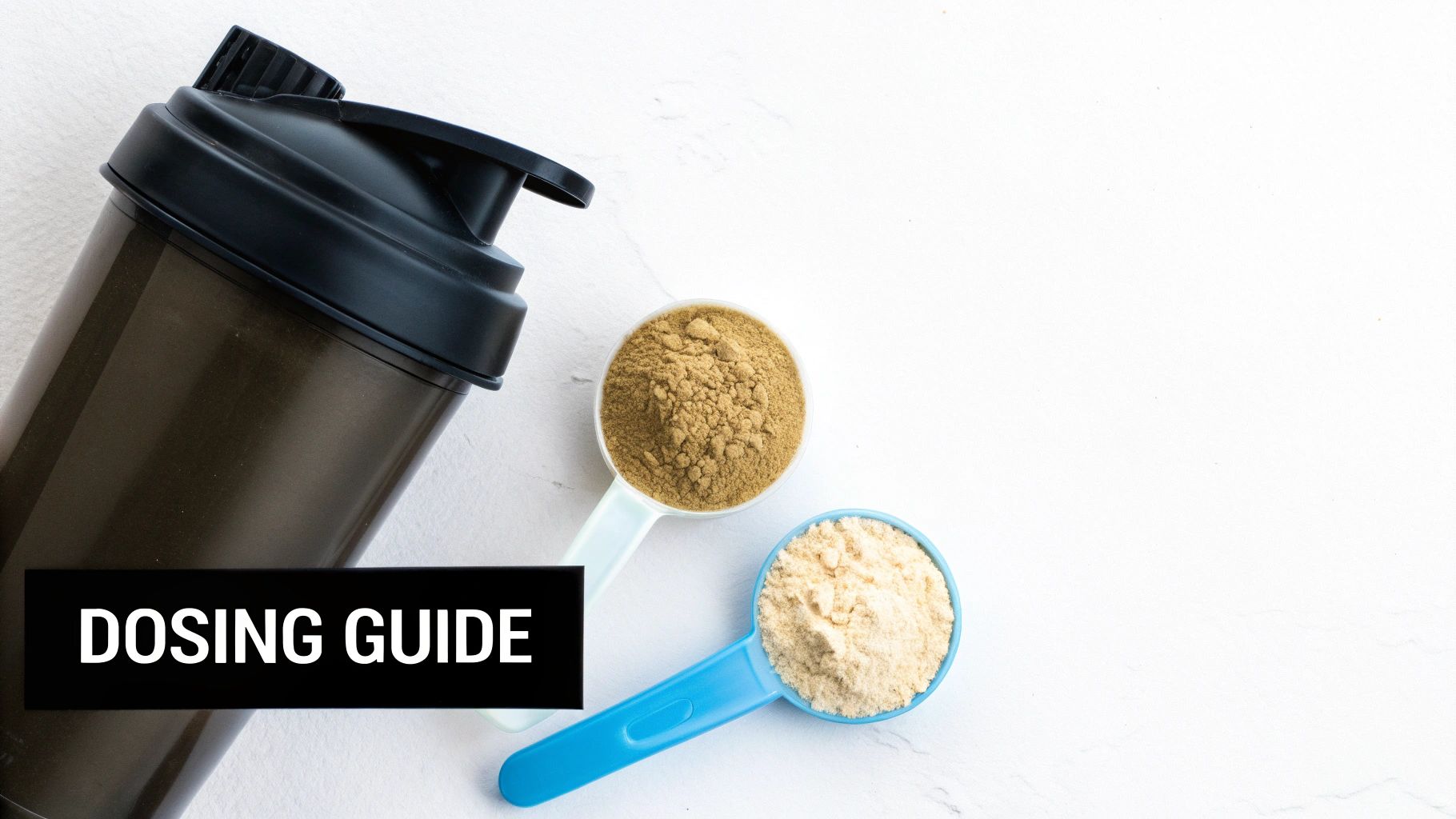
When you get down to it, how you actually use a supplement day-to-day is what really matters. This is where the creatine HCl vs monohydrate debate gets practical. The dosing strategy and potential for side effects are often the biggest deciding factors for most people.
For creatine monohydrate, the game plan is clear, simple, and backed by a mountain of evidence. The gold standard is a daily maintenance dose of 3-5 grams. That’s it. This amount has been shown time and time again in countless studies to effectively saturate your muscles and keep them topped off.
Creatine HCl takes a completely different route. It’s sold on the idea of a "micro-dose," usually just 1-2 grams per day. The entire premise here is that its better solubility means better absorption, so you need less of it to get the same results. It sounds great on paper, but this claim doesn't have the robust scientific proof to show it saturates muscle tissue as effectively as monohydrate's proven dose.
Who Experiences Side Effects and Why?
The discussion around side effects is where many people start leaning towards HCl. It’s true that a small number of users report some bloating or stomach upset when they begin taking creatine monohydrate.
More often than not, however, these issues come down to how the person is using it, not the creatine itself. The usual mistakes are:
- Not Drinking Enough Water: Creatine works by pulling water into your muscles. If you’re not hydrating properly, it can lead to digestive issues.
- Clumpy Powder: If the creatine doesn't dissolve well, it can sit in your stomach and cause discomfort, especially if you have a sensitive gut.
- Overdoing It: Taking massive doses all at once, particularly during a "loading phase," can sometimes be too much for the digestive system to handle.
Here’s where creatine HCl’s main advantage comes in: its superior solubility. The argument is that because it dissolves so easily, it bypasses the potential for gut-related problems.
For the small fraction of people who are genuinely sensitive to monohydrate, HCl might provide a solution. But let's be clear: the overwhelming majority of individuals have zero adverse effects from monohydrate when it's used correctly.
For most, any potential issues can be solved by choosing a micronized monohydrate powder (which mixes much better) and staying on top of their water intake. Following a sensible dosing protocol is also critical; our detailed creatine dosage guide can walk you through finding the right amount for your specific needs.
In the end, it’s a trade-off between a time-tested protocol and a newer, theoretical one. Monohydrate's dosing is built on decades of solid research, while HCl's micro-dosing concept is still waiting for a solid body of evidence to back it up in human performance trials.
The Real Cost of Your Creatine Supplement
Let's talk about something just as important as the science: the hit to your wallet. When you're committing to a supplement long-term, cost is a huge deal. And in the creatine HCl vs monohydrate matchup, the price difference isn't just a small gap—it's a chasm.
Creatine monohydrate is, without a doubt, one of the most budget-friendly performance aids you can buy. Thanks to decades of research, massive consumer demand, and streamlined manufacturing, its price has been driven way down. It’s a proven workhorse that delivers results without draining your bank account.
Creatine HCl, on the other hand, is marketed and sold as a premium, "advanced" option. The higher price tag is often justified by claims of better absorption and the need for a smaller "micro-dose." But when you look at the cost per gram, the difference is stark. That premium really starts to add up month after month.
A Breakdown of Value
To put this in real-world terms, let’s look at what you’re actually paying for each serving. Even if the dose for HCl is smaller, the price per gram is often multiple times higher than monohydrate.
- Creatine Monohydrate: You get an incredibly low cost for a standard 5-gram serving. It's a fantastic value.
- Creatine HCl: The cost is significantly higher, even for a smaller 1-2 gram serving.
This isn't just marketing fluff; it's rooted in the global supply chain. The market for raw creatine monohydrate is a well-oiled machine, valued at over USD 427 million. Production is dominated by massive, efficient manufacturing hubs, which keeps the final cost low for you and me. You can dig deeper into the creatine raw material market on archivemarketresearch.com if you're curious.
Availability and Practicality
Price isn't the only practical thing to consider—you also have to be able to find it. Creatine monohydrate is everywhere. Walk into any supplement shop or browse online, and you'll find it from nearly every brand imaginable, in all sorts of sizes and forms. This competition gives you the power to shop around for the best price and quality.
The bottom line is simple: Creatine monohydrate’s combination of low cost and universal availability makes it the most practical and sustainable choice for the vast majority of athletes and fitness enthusiasts.
Creatine HCl is a different story. It's much less common. You’ll usually find it in specialized pre-workout blends or from a smaller number of brands, which limits your choices and often locks you into a higher price. For most people, the extra expense for HCl just doesn't line up with its unproven advantages over the cheap, reliable, and time-tested original.
Final Verdict: When to Choose Monohydrate or HCl
https://www.youtube.com/embed/CXFyQH7ZTio
So, after all the science and comparison, which creatine should you actually buy? It really boils down to a pretty simple, evidence-based choice. For almost everyone, the decision is refreshingly clear-cut.
Creatine monohydrate is the undisputed champion and my go-to recommendation. If you're new to creatine, an athlete who needs proven, reliable results, or just looking for the most bang for your buck, monohydrate is your answer. Its effectiveness is supported by literally decades of scientific research, making it the gold standard for boosting strength, power, and muscle growth.
A Niche Role for Creatine HCl
This leaves creatine HCl playing a very specific, supporting role. It's really only an option for the small handful of people who experience significant and ongoing stomach issues—like bloating or cramping—from micronized creatine monohydrate. And that’s even after trying the basics, like drinking plenty of water with it.
Here's the bottom line: Creatine HCl isn't a better form of creatine for performance. It's simply a potential workaround for managing side effects in a very specific population. Think of it as a premium-priced alternative for sensitive stomachs, not a performance upgrade.
Of course, remember that supplements are just one piece of the puzzle. Nailing down your nutrition by learning how to calculate macros for your fitness goals is far more important. This simple decision tree can help you visualize where to start with creatine.

As you can see, the path for most people—those focused on proven results and smart spending—points straight to monohydrate. This isn't just an opinion; it's reflected in the market. The global creatine supplement industry is expected to surge to USD 2,171.6 million by 2035, a growth driven almost entirely by the tried-and-true monohydrate form.
My advice? Start with monohydrate. It's the proven path to results.
Common Questions Answered
When you're weighing your options between creatine HCl and monohydrate, a few questions always pop up. Let's clear the air so you can make a smart choice based on facts, not just marketing hype.
Do I Need to Do a "Loading Phase" with Creatine HCl?
Probably not. The whole idea behind the "loading phase" with creatine monohydrate is to saturate your muscles faster. But creatine HCl is marketed on the premise of micro-dosing, which makes a loading phase pretty much pointless.
Keep in mind, though, that the science supporting these tiny HCl doses isn't nearly as robust as the mountain of evidence behind standard monohydrate protocols.
Which One Mixes Better in Water?
Creatine HCl definitely wins on this front. Thanks to its chemical structure, it dissolves almost instantly in water, leaving no gritty residue at the bottom of your shaker. It’s a clear advantage if you can’t stand even a little bit of sediment.
That said, a good quality micronized creatine monohydrate mixes up almost as well. If you get a bit of grit, the simple fix is just to add a little more water. Problem solved.
Is Creatine HCl as Safe as Monohydrate?
This is a big one. Creatine monohydrate is arguably the most researched sports supplement on the planet. Decades of studies have confirmed its safety profile, even with long-term use. We know it’s safe.
Creatine HCl is generally considered safe for use, but it simply doesn't have the same long history of rigorous scientific vetting. Monohydrate's safety record is backed by hundreds of studies over 30+ years, making it the gold standard.
So, while both are likely safe, monohydrate's track record offers a level of assurance that HCl can't match yet. For anyone thinking about long-term use, that documented history provides real peace of mind in the creatine HCl vs monohydrate comparison.
Tired of the whole powder and shaker routine? Smash.com delivers the proven benefits of 5g of creatine monohydrate in tasty, easy-to-eat gummies. Upgrade your routine and smash your goals with Smash.com today!


